Powering Progress Through Partnership: Leonardo Fanzini on Strategic Sourcing at GE Vernova
With nearly two decades of procurement experience, Leonardo Fanzini leads a critical mandate at GE Vernova: managing over $150 million in global sourcing for services that support the company’s gas-powered equipment portfolio. From advanced machining to on-site maintenance, his role touches every facet of supplier engagement from risk management and sustainability to innovation and resilience. In this in-depth interview, Fanzini shares how GE Vernova is transforming service sourcing into a strategic advantage, emphasising the importance of supplier partnerships, digitisation, and operational excellence. His insights highlight how sourcing professionals can drive long-term value by aligning quality, cost, and collaboration in an increasingly dynamic energy landscape.
Click below to access the digital version
Career Path and Role at GE Vernova: Can you share your journey leading up to your current position as Global Sourcing – Services at GE Vernova? What are your primary responsibilities in this role?
The role I am currently responsible for aims to achieve a strategic alignment of the global spend to third parties in maintenance services for Vernova gas-powered equipment. Simplifying, it includes services such as rigging, scaffolding, other equipment rentals, as well as highly specialised services such as mechanical repairs, electrical testing, and various installation services.
The main goal is to have services strategically covered, whether at a global or at a regional level. This task is shared with either strategic sourcing functions at HQ level or regional procurement teams.
Before taking over these responsibilities, I have always been engaged within GE’s power generation units’ maintenance activities in various procurement roles at a regional and global level. In my 17-year career journey, I’ve been engaged in almost all the aspects of procurement and sourcing, from buy-to-pay process management to commodity strategy development.
Developing Global Sourcing Strategies: With over $150 million in annual spend under your purview, how do you approach developing and implementing global sourcing strategies for services?
The first step is to understand whether the category of spend can be approached from a global, regional, or even country-level standpoint. At this stage, the total monetary value serves the purpose of ranking the various commodities but is not as relevant as other critical factors such as the geographical application of the services, the regulatory environment, logistics and transportation costs, key suppliers’ footprint, etc.
After this initial analysis, global categories are separated from the local ones, and two different approaches are implemented. Categories usually labeled as “global” (e.g., logistics, travel and living) are analysed in synergy with the global indirect sourcing teams, whether at corporate or business unit level, while the “local” ones (e.g., on-site maintenance services, specialised craft labour) deserve a dedicated analysis jointly developed with procurement and operations regional teams.
The typical sourcing analytical tools and templates (e.g., Kraljic portfolio analysis) are utilised in multiple stages to assess whether a partnership engagement (e.g., services which are critical to customers), rather than a leverage or transactional one (e.g., MRO, consumables), can give us the best potential outcome.
Different implementation actions (multi-year agreements, suppliers’ e-auctions) follow accordingly.
Supplier Performance Management: What key metrics and processes do you utilise to assess and manage supplier performance, ensuring alignment with GE Vernova’s standards?
At Vernova, we are very focused on the application of lean methodology. Since the time of GE’s Six Sigma approach, the elimination of waste and continuous improvement have become a company-wide embedded “mantra.” Daily management, standard work, bowler charts, and kaizen events are more than just tools; they are a “second skin” in our way of operating. They are applied in managing key partners and suppliers as well.
In terms of key performance indicators, we use the acronym SQDC, which stands for Safety, Quality, Delivery, and Cost. Safety is our top priority, and we need our suppliers to consider it as such too. Every meeting starts with reflections on incidents, hazards, and safety-related topics, and we consistently promote a “stop work” attitude in case any of us identifies a potential safety risk. Quality follows second, with the ambitious goal of zero defects in our and our suppliers’ deliveries to customers. Delivery time is of the essence, as our customers face millions in losses if we delay outage execution by just one day. Finally, but nonetheless extremely important, is the focus on cost to ensure that we get the best prices available in the market.
Sustainability in Sourcing: How does GE Vernova integrate sustainability and environmental considerations into its sourcing and procurement decisions?
As a power equipment manufacturer with almost 25% of the world’s electricity generated with the support of our technology, Vernova is at the crossroads of critical decisions for the future of energy and environmental sustainability. Future energy demand, mainly driven by additional needs from data centres and AI applications, pushes us hard to increase capacity in the market. On the other hand, tight environmental regulations demand a cleaner and more efficient way to cope with such an increase. This is why a core tenet of our sustainability strategy is to “electrify and decarbonise” the world, to be achieved through a diversified portfolio of solutions (Power, Renewables, Grid, and Storage).
Although maintenance services execution may be seen as less critical from an environmental impact standpoint, we are undertaking several initiatives to improve the sustainability of our procurement decisions, particularly in logistics and transportation, with the key goal of reducing CO2 emissions from our logistics partners.
An important topic, which I am very keen about, is suppliers’ financial sustainability. We constantly monitor our key suppliers’ financial health and bankruptcy risk to ensure them healthy profitability as well as business continuity in a mutually beneficial collaboration.
Supplier Diversity Initiatives: Could you discuss GE Vernova’s commitment to supplier diversity and how it influences your sourcing strategies?
Commitment to a diverse and inclusive value base is a critical part of GE Vernova’s Human Rights Statement of Principles. In full alignment with international standards of human rights, it offers clear guidelines for ethical and safe business practices, which apply to our suppliers as well.
Our employees’ code of conduct, called “The Spirit and the Letter”, outlines our policies in terms of fairness and respect for all our stakeholders regardless of gender, race, religion, etc. and is expected to be followed and adhered to by our partners. It is fully embedded in our Know Your Suppliers (KYS) due diligence process, a key component of which is our “Suppliers Integrity Guide”. This process focuses on supplier practices such as labour policies, the age and nature of workers, among others. Supplier input is then properly evaluated and ultimately approved if aligned with our requirements and expectations.
We don’t stop there, though. We continuously seek to elevate our own and our suppliers’ standards of behaviour: we utilise external third-party data for risk identification, analysis, mitigation, and remediation. We also continuously refresh and update supplier training and provide additional documentation for risk assessment and mitigation planning.
Navigating Global Supply Chain Challenges: In light of recent global disruptions, what strategies have you employed to maintain resilience and adaptability in GE Vernova’s supply chain?
Most of the services supply chain is regionalised or even localised and situated close to customers’ locations. Therefore, recent global disruptions have had very limited impact or were addressed by switching from global to regional or local service providers. The exact opposite approach is used when unexpected changes at the local level, such as social unrest or force majeure due to environmental disruptions, render local sources unavailable. In such cases, we switch providers by sourcing from the nearest area unaffected by the change.
To help us predict areas of risk and tailor mitigation strategies, we use supplier scorecards based on financial records and past performance in terms of service level. When we identify a low score indicating a supplier may default on its commitments, we proactively approach available alternatives or new sources, for example by shifting from a single-source to a dual-source strategy.
More generally, and not limited to services, we adopt different risk mitigation strategies depending on the type of risk involved. These range from unknown unknowns, where the likelihood of occurrence cannot be quantified, to known unknowns at the opposite end of the spectrum. The case of supplier scorecards, as previously discussed, falls into this second category.
Technological Advancements in Procurement: How is GE Vernova leveraging digital tools and technologies to enhance procurement efficiency and transparency?
Although we are still in the early stages of our procurement digitisation journey, at Vernova we take very seriously the opportunities offered by the latest digital technologies. Our aim is to cover the full range of applications from purely descriptive to prescriptive, including predictive analysis tools.
We already use, or are in the process of testing, different application software in the areas outlined above.
For the simple collection and visualisation of historical data, we create a data warehouse to segment suppliers or cluster procured services. These are visualised through real-time dashboards using some of the most popular software available on the market.
To predict future demand and commodity prices, for example, we have developed strong partnerships with global providers and make extensive use of regression analysis tools. The goal, however, is to leverage machine learning to build a prediction model trained on data from descriptive analysis, which can then be used as an input for the prescriptive phase.
The final phase will ideally consist of digitising purchasing decisions—such as quantities and timing of purchases, supplier selection, negotiation strategies, and smart contracting through the development of a decision model using advanced analytics tools such as NLP, AI, and blockchain.
Collaboration Across Departments: How do you ensure effective collaboration between the sourcing department and other divisions within GE Vernova to achieve cohesive business objectives?
In addition to collaboration tools provided by the latest networking technologies, clear and effective communication remains essential to ensuring full alignment of goals and objectives both at the company level and within each function. This is especially true in a matrix-operating organisation like Vernova.
Sourcing annual priorities are set jointly with other divisions, usually cascaded down from the most senior levels, but always incorporating the bottom-up inputs gathered at critical touchpoints throughout the year.
Operationally, short-term goals between collaborating departments do not always align. To avoid unnecessary and counterproductive discussions such as prolonged negotiations or escalations to functional leaders it is best practice to involve all key functions, including procurement, from the very early stages. This applies whether we are talking about a maintenance project or an ERP rollout. The outcomes are significantly better when procurement is part of the planning phase, rather than being asked to optimize decisions already made at the engineering or operational execution level.
At the same time, selecting strategic partners is not the exclusive domain of sourcing. Involvement from other functions is critical to achieving success.
Balancing Cost and Quality: In the context of global sourcing for services, how do you strike a balance between cost optimisation and maintaining high-quality standards?
As explained regarding suppliers’ performance, cost is a critical factor alongside safety, quality, and delivery. In sourcing services, these priorities often conflict with one another: a supplier offering the fastest lead time may achieve it by cutting corners or inflating prices through expediting fees; conversely, we may receive the highest-quality service but not within the required timeframe or at the most competitive price.
To ensure that the required levels of safety, quality, and delivery are consistently met by our service supply base, we apply a variety of methodologies and approaches, which are continuously monitored and refined as suppliers perform on our behalf.
For safety assessment, we work with preferred partners who independently evaluate suppliers based on their EHS (Environment, Health, and Safety) performance in accordance with our specified requirements.
For quality, a dedicated team of engineers qualifies and audits suppliers against Vernova’s specifications.
We use On-Time Delivery (OTD) metrics to evaluate service suppliers based on their ability to deploy at customer locations and complete services within the requested timeframe.
Once the providers meet these set targets, we are in a strong position to competitively bid or negotiate pricing using market data, historical benchmarks, and projected inflation to ensure optimal value.
Future Trends in Global Sourcing: What emerging trends do you foresee in global sourcing, and how is GE Vernova positioning itself to stay ahead in the evolving energy sector?
I see two diverging trends emerging in today’s procurement world.
On the one hand, more transactional activities ranging from purchase order requisition to invoice reconciliation, and including so-called “desktop procurement” tasks (e.g., price bargaining, competitive bidding analysis and evaluation, contract preparation) are expected to be increasingly automated and digitised, requiring less and less human involvement and interaction.
Conversely, purely cost-centred procurement, while still relevant as external purchases make up a significant portion of a firm’s total cost, is now viewed as only one aspect of the value procurement can offer.
With early supplier engagement and closer ties to critical-to-customer partners, sourcing can significantly enhance revenue and market share for companies that effectively leverage it.
This requires a significant shift in the typical sourcing department’s mindset and leadership approach: a collaborative and results-oriented engagement with partners, rather than an exclusive focus on cost-cutting, is key to successfully positioning the sourcing function within the broader organisation. A tangible and foreseeable consequence of this shift would be the replacement of the current “commodity management” model with a more strategic “supplier management” approach.
Strategic Collaboration: GE Vernova partners with a diverse range of service providers. How do you identify which partners are best suited for complex and mission-critical scopes? Can you share an example where collaboration with a trusted partner made a measurable impact?
Collaboration, particularly for services on complex and highly specialised equipment like Vernova’s—develops through several years of interaction at different levels, but most of it happens during real-time execution at customer sites. In addition to screening, evaluating, and approving basic mandatory requirements conveyed through Know Your Supplier (KYS) documentation, we look for providers with multi-year experience on gas-powered turbines who consistently perform at a high level across a range of situations (e.g., scheduled planned maintenance, unplanned and forced outages).
Our team of quality engineers follows selected partners throughout the various stages of the relationship, from simple tasks and operations all the way through to complex machining and assembly processes. The highly developed skills our partners have nurtured particularly in training selected professionals cannot be easily transferred internally as a commodity, nor are they readily available in the broader market.
In-Place Machining Company is a best-in-class example of such collaboration. Their long-tenured expert machinists have enabled Vernova to complete critical work promptly, reduce the impact on scheduled activities, eliminate freight costs, and achieve zero rework in complex operations such as erosion ring machining, on-site weld repairs, and alignment of turbine casings.
Innovation Through Partnership: Several partners have supported GE Vernova with innovative approaches — such as robotic inspections or advanced machining solutions. How important is innovation in your supplier relationships, and how do you foster it?
Innovation is becoming increasingly critical, even in a non-product environment such as heavy-duty repair services. Vernova likely has one of the strongest internal engineering capabilities in designing and manufacturing industrial machines for the energy sector, but in several cases, these resources are in short supply during the maintenance phase of our equipment.
For this reason, continuously improving our service performance relies heavily on the solutions developed and tested by our selected partners through years of industrial application. Our suppliers constantly monitored and audited by our team of sourcing quality engineers are required to adhere to the highest industry standards and are certified in nearly all areas in which they operate.
I must highlight the case of K-Machine Industrial Services, which, in addition to supporting complex scopes, consistently delivers high-quality services and responds rapidly to emergent needs involving the repair, welding, and machining of our casings, diaphragms, and nozzles. They have also demonstrated innovative capabilities, such as using robotic devices to inspect the lower bowl of control valves in a safer and more cost-effective way.
Such innovative solutions become especially critical in supporting our internal repair network when it comes under pressure from intensifying customer demand.
Responsiveness in Outages: During high-pressure outages, speed and precision are essential. How do you ensure your partners can deliver under tight timelines, and are there any standout examples from recent projects you’d like to share?
We try in every possible way to integrate key suppliers into all preparation phases of planned maintenance. This is extremely important to ensure that the right people and tools are available precisely when needed. Once deployed, it is also critical that the supplier’s resources effectively cooperate with Vernova’s crew to minimise the impact of any last-minute changes in the scheduled activities.
Of course, this isn’t always feasible or possible to execute in a structured way particularly during unplanned outages. Continental Field Systems, a key partner for high-quality onsite machining services such as boring bar machining and ovalised grinding, clearly showcased how critical supplier responsiveness is when they acted as a turnkey provider for more than 30 days, managing complex scopes both planned and unplanned at the Hanging Rock power plant in Ohio.
Another excellent example is Sims Crane and Equipment, a provider of critical enablers such as rented cranes and their operators. They consistently perform in a timely, highly responsive, and supportive manner. Their involvement allowed Vernova to meet customer expectations and deliver 100% on-time performance, as demonstrated at the Fort Myers power plant in Florida.
Enhancing Quality and Compliance: With strict technical specifications in place, how do your partners contribute to ensuring the highest quality standards, especially in areas like inspection, machining, and bearing repairs?
The support of our partners is vital to ensure that Vernova’s highest quality standards are properly transferred to our customers. A good example is provided by the repairs of components not originally manufactured by us, such as bearings and auxiliary equipment (e.g., valves).
In Europe, it took several years to set up a highly qualified supply base in the above-mentioned services. Finally, after careful selection and a lot of hard work from Vernova’s sourcing quality engineers, we came up with two strategic partners whom we rely upon for quality, as well as for high responsiveness and cost-effectiveness.
Wärtsilä Ibérica is our preferred regional supplier for off-site bearing repairs. They provide qualified services at their repair centers for various types of bearings (e.g., journal bearings, generator bearings, etc.), all fully compliant with Vernova’s technical specifications, in an efficient and timely manner.
Similarly, for valve repairs, Reman Europe is a critical supplier for all valve repair needs in Europe. They have become, over the years, the center of reference to reduce lead times to end customers by offering a wide array of solutions in a cost-effective way.
Leveraging Financial Insight: GE Vernova places strong emphasis on financial sustainability. How does partnering with providers like RapidRatings help you manage supplier risk and maintain continuity in critical operations?
We always operate with the highest financial rigor to ensure that our commitments to shareholders are fulfilled and, whenever possible, exceeded. This flows through in every aspect of our activities, and we ask the same level of attention to financial performance from our key suppliers as well. This is extremely important in maintaining a healthy supply base and in avoiding the risk of disruptions or discontinuities in our service to customers.
As most of our partners are privately owned companies, it is a very difficult and labor-intensive effort to achieve a satisfactory level of visibility to monitor such risks. To help us in tracking the potential risk of supplier bankruptcies, RapidRatings provides us with a wide suite of products specifically designed for that purpose.
For example, their Financial Health Rating (FHR)® effectively maps and ranks suppliers’ default risk, as well as their medium-term sustainability index, measured through operational indicators. Particularly useful for procurement professionals with no formal training in accounting and finance is the Financial Dialogue Report, a concise summary that guides us in articulating discussions with suppliers regarding their plans to address and improve any highlighted shortcomings.
Scaling with Global Support: Several of your partners have mobilised globally, especially during peak outage seasons. How critical is global scalability in your sourcing strategy, and what does it take to ensure partners are ready for such demand?
High-quality support is not always available at the local or regional level especially during peak seasonal demand. We highly benefit from those partners who are willing to support not only in their usual geographical areas of operation but also overseas, and with the needed flexibility. Of course, their deployment in remote locations has consequences both in terms of timeliness in delivery and additional costs.
We reduce or mitigate such negative impacts by carefully integrating critical suppliers’ resources during the planning phase and by crafting commercial conditions that are both sustainable for suppliers and do not jeopardise our service competitiveness at the local level.
Sidewinders, a provider of generator repair services headquartered in Utah, is a best-in-class example—servicing our operations globally by mobilising highly skilled technicians across all regions. In other cases, where the needed capabilities are neither in-house nor with our partners, we rely on collaboration with specialised temporary labour agencies such as Deena Energy Services. These partners offer deeper knowledge of local markets and are able to identify the best available resources to match our needs while offering competitive solutions.
Supplier Recognition and Accountability: Some of your partners have been recognised at the GE Vernova Americas Suppliers Conference. What qualities do you look for when honoring suppliers, and how do these recognitions shape long-term partnerships?
To reward those suppliers who exceeded our expectations and differentiated themselves from others, we use Vernova’s Principles of Excellence: act as one team, put a relentless focus on the customer, operate with a lean mindset, drive innovative approaches, and be accountable to promises and commitments.
We have seen over several years that awarding suppliers not just with contracts and purchase orders but also symbolically by showing that we value their business and the behaviours we most appreciate has significantly strengthened relationships.
Last January, in Houston, we focused our attention on providers of testing services (e.g., borescope inspections and non-destructive testing). These types of services are usually peripheral to the core of the maintenance activity. Nevertheless, they have a significant impact on our customers because their results influence the go/no-go decision for resuming plant operations.
Applied Technical Services was awarded for their high level of accountability, which resulted in very positive customer feedback. The NDT division of Integrity Assessment Group (IAG) was also recognised for their innovative approaches to inspection solutions, tested and implemented across more than one hundred outages.
Building Long-Term Value: From new suppliers to long-standing collaborators, how do you balance onboarding fresh expertise with deepening established relationships for long-term value creation?
Vernova is always looking to continuously improve its performance for customers. We usually achieve the needed incremental change from the existing supply base, but this is not always possible when we need to radically improve along different dimensions. In such circumstances, we are compelled to search for alternative sources of value in areas we are not fully familiar with. This effort takes considerable time, and often the chosen path results in a dead end.
Once the new source has been identified, we usually don’t proceed with a full-blown approach; we start small in a key area of focus, delve deeper into it, and later extend the relationship to neighbouring applications. The development is almost never linear or straightforward, there are often ups and downs in implementation, sometimes followed by failures that require additional efforts to get back on track.
A good example of a new partnership currently in development is ServoCon, a Virginia-based provider of hydraulic systems and controls. We are sourcing cost-efficient hydraulic system solutions from them, including services, and implementing an exchange program of dedicated solutions aimed at decreasing our lead time to customers by 90%.
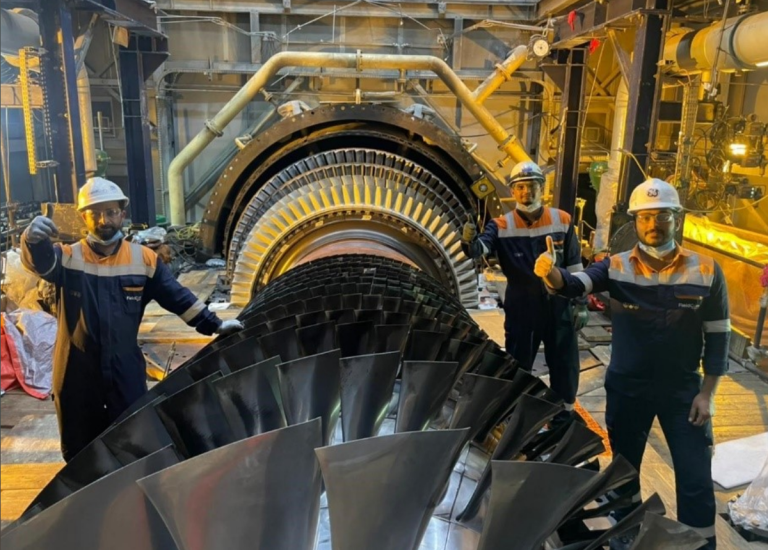
Safety and Specialised Services: Safety is a top priority at GE Vernova. How do you evaluate and align your service partners on safety performance, particularly in high-risk fields like rigging, hydraulic systems, and electrical installations?
Safety is the biggest concern at Vernova. Whether we incur incidents or not, our main goal is to ensure that all employees within the organisation, and those partnering with us, return home healthy and safe at the end of their workday.
To this purpose, our EHS department has developed rigorous procedures for any type of on-site work. For our suppliers performing hazardous on-site activities, we have devised an ad hoc program to certify them before deployment at our (or customers’) facilities. This is a thorough process, after which suppliers must demonstrate an almost perfect knowledge and mastery of our safety procedures, and they are re-evaluated on a recurring basis.
Since my first days at GE, I have always been impressed by the attention, effort, and dedication placed on all aspects of safety. I still vividly remember a fatality involving one of our electrical services contractors in Turkey almost eighteen years ago, and the deep and extensive investigation that followed.
Although the path to total safety is never complete, suppliers such as SG Energy, our key provider of electrical services and turbine status diagnostics, testify that it is possible to work safely and with the highest performance standards.
Looking Ahead – Partnering for the Future: As GE Vernova continues to evolve, what role do you see partners playing in shaping the future of service sourcing, and how are you preparing to deepen collaboration in areas like digitisation and decarbonisation?
Obviously, Vernova does not operate in a bubble isolated from the rest of the world. As with other enterprises, its evolution is integrated with and heavily affected by what happens around us. The strategic blueprint needs to be constantly recalibrated.
Nonetheless, I am positive and optimistic in seeing that both Vernova and its partners are well equipped and ready to benefit from the upcoming challenges. I foresee an ever more relevant role for our service partners in the years to come. They will be more integrated not only in our planning and execution stages, but also in the commercialisation of our service solutions, providing add ons that Vernova cannot (or does not have the strategic intent to) include in its internal capabilities.
This will require from suppliers a fully open and transparent approach in sharing data and metrics to be further analysed and processed by analytical tools, as well as an expansion of their current capabilities to support a faster, leaner, and more sustainable value chain.
Companies such as K Machine Industrial Services, Applied Technical Services, and all the others I have previously mentioned have clearly demonstrated the potential for the kind of future collaboration envisioned above.
In Association with:
K Machine Industrial Services is a U.S.-based specialist in heavy rotating equipment repair and manufacturing. Founded in 1993 and headquartered in Savannah, Georgia, the company operates an 85,000-square-foot facility and multiple satellite locations across the southern United States. K Machine provides 24/7 emergency repairs, field machining, and component manufacturing for industries including power generation, pulp and paper, and petrochemicals. Their expertise encompasses steam turbines, gearboxes, high-pressure valves, and wood-processing equipment. As part of the MacAljon family of companies, K Machine combines deep technical knowledge with rapid mobilization capabilities, serving clients across North America and internationally.
Applied Technical Services (ATS) is a leading provider of engineering, testing, inspection, and calibration services. Founded in 1967 and headquartered in Marietta, Georgia, ATS serves a diverse range of industries, including aerospace, automotive, construction, and power generation. The company’s comprehensive offerings encompass nondestructive testing, chemical analysis, metallurgy, environmental testing, and forensic investigations. With a commitment to quality and reliability, ATS operates a network of accredited laboratories and field service teams across the United States, delivering customised solutions that meet stringent industry standards. Through its family of companies, ATS continues to expand its capabilities, supporting clients in achieving operational excellence and compliance.
In-Place Machining Company (IPM) is a global leader in on-site machining, large-scale cutting, and precision measurement services. Headquartered in Milwaukee, Wisconsin, IPM has been delivering specialized field machining solutions since 1976. With a team of over 200 skilled technicians, the company serves industries such as power generation, marine, aerospace, and heavy manufacturing. IPM’s comprehensive services include field machining, laser alignment, metrology, and machine shop capabilities, ensuring minimal downtime and cost-effective solutions for complex maintenance and repair challenges. Operating across North America and internationally, IPM is committed to innovation, safety, and excellence in industrial maintenance.

Continental Field Systems, Inc. (CFS) is a U.S.-based provider of field and shop machining, welding, and turbine repair services. Founded in 1979 and headquartered in Savannah, Georgia, CFS serves industries including power generation, pulp and paper, chemical, marine, steel, and recycling. The company offers services such as on-site machining, manual and automatic welding, valve repair, and turbine maintenance. With a commitment to quality and timely delivery, CFS has established itself as a trusted partner for complex industrial maintenance and repair projects.
SG Energy Solutions is a U.S.-based electrical engineering firm specializing in power systems, controls, and automation for the energy sector. Founded in 2000 and headquartered in Southfield, Michigan, the company has expanded its presence with offices in Atlanta, Houston, and other locations across the United States. SG Energy Solutions offers a comprehensive suite of services, including engineering, electrical infrastructure, instrumentation, and controls, serving utility companies, power plants, and industrial clients. Notably, their proprietary Turbine Cardiogram (TKG™) technology provides real-time diagnostics for turbine maintenance without requiring shutdowns. With a commitment to safety, innovation, and accountability, SG Energy Solutions has successfully completed over 750 projects worldwide, delivering tailored solutions that enhance operational efficiency and reliability.
Sims Crane & Equipment Co. is a leading provider of crane rental and rigging services in the southeastern United States. Founded in 1959 and headquartered in Tampa, Florida, Sims Crane operates over 15 locations across Florida, Georgia, Alabama, and Tennessee. The company offers a comprehensive fleet of mobile cranes, including all-terrain, crawler, rough terrain, tower, and truck cranes, with capacities ranging from 8 to 600 tons. Sims Crane is renowned for its commitment to safety, with all operators, riggers, and flagmen holding NCCCO certifications. Their services encompass 3D lift planning, specialized rigging, heavy hauling, and 24/7 emergency dispatch. As a third-generation family-owned business, Sims Crane combines decades of industry expertise with innovative technology to deliver reliable lifting solutions for construction, infrastructure, and industrial projects.
RapidRatings is a global leader in financial health analytics, providing predictive insights into the financial stability of public and private companies across over 140 countries. Founded in 2007 and headquartered in New York City, RapidRatings offers solutions that help organizations manage supply chain, third-party, and credit risk. Their proprietary Financial Health Rating (FHR) system delivers objective assessments based on financial statement data, enabling clients to anticipate potential disruptions and make informed decisions. Trusted by Fortune 500 companies, RapidRatings supports businesses in building resilient partnerships and ensuring operational continuity.

ServoCon ALPHA is a U.S.-based specialist in fluid power systems and servocontrol solutions. Founded in 1979 and headquartered in Fishersville, Virginia, the company provides design, manufacturing, and remanufacturing services for servovalves, actuators, and hydraulic components. ServoCon ALPHA serves both commercial and military sectors, offering solutions that address contamination and wear-related challenges. With a commitment to quality and innovation, the company ensures that its products and services meet rigorous standards, supporting clients in achieving optimal performance and reliability in their operations.
Wärtsilä’s Bearing Centre is a global leader in advanced bearing solutions, specialising in the design, manufacturing, and repair of white metal bearings and pads. Leveraging over 50 years of expertise, the Centre employs its patented 100BOND® white metal laser technology to enhance bearing performance, longevity, and environmental sustainability. Serving a diverse range of industries, including marine and power generation, Wärtsilä’s Bearing Centre offers comprehensive services such as Babbitt bearing repair, inspection, part refurbishment, and emergency support. With a commitment to innovation and quality, the Centre ensures optimal operational efficiency and reliability for clients worldwide.
SWA Staffing is a U.S.-based technical staffing firm specialising in skilled trades across sectors such as power generation, renewables, manufacturing, commercial construction, and oil and gas. Headquartered in Orlando, Florida, with additional offices in Utah, SWA leverages over 75 years of combined industry experience to deliver tailored workforce solutions. Their services include contract and direct hire placements, mobilisation and demobilization support, payroll management, and safety training. By providing EHS-trained, background-checked professionals, SWA ensures clients receive qualified talent to meet project demands efficiently and safely.

Reman Europe is a Dublin-based engineering firm specializing in the overhaul and testing of gas turbine fuel control valves and auxiliary components. Established in 2001, the company is the exclusive authorized service center for Young & Franklin products in Western Europe, supporting GE heavy-duty gas turbines used in power generation and gas compression. Reman Europe’s ISO-certified workshop offers comprehensive services for components such as stop valves, sequencing valves, inlet guide vane actuators, and fluid flow dividers. With a commitment to quality and precision, the company ensures optimal performance and reliability for critical turbine systems across the energy sector.
Integrity Assessment Group (IAG) is a U.S.-based provider of integrity assessments and maintenance services for the oil and gas, power generation, renewables, and process industries. Founded in 2001 and headquartered in Clare, Michigan, IAG offers turnkey solutions that integrate across complementary service lines, including advanced non-destructive testing (NDT), rope access, cathodic protection, and construction services. With a Total Recordable Incident Rate (TRIR) of 0, IAG emphasizes safety and utilizes the latest technology to deliver high-quality, actionable results. Their services help clients enhance asset reliability, reduce regulatory compliance issues, and minimize environmental impacts.
Deena Energy is an Irish-headquartered staffing and project services firm specializing in the Power Generation, Oil & Gas, and Renewables sectors. Established in 2014 and based in Balbriggan, Co. Dublin, Deena Energy provides skilled personnel across all project phases—from design and construction to commissioning and operations. As a subsidiary of Cpl Resources, part of Japan’s Outsourcing Inc., Deena Energy combines local expertise with global reach. The company’s name, derived from the Irish Gaelic word Daoine meaning “people,” reflects its commitment to supporting field personnel throughout every assignment.