From Science to Strategic Sourcing: Mukondeleli on Leading Procurement with Purpose Across Sub-Saharan Africa
Procurement leadership across Sub-Saharan Africa demands far more than commercial discipline. It requires cultural awareness, resilience, ethical judgement and the ability to build trusted relationships across diverse markets, supply bases and internal teams.
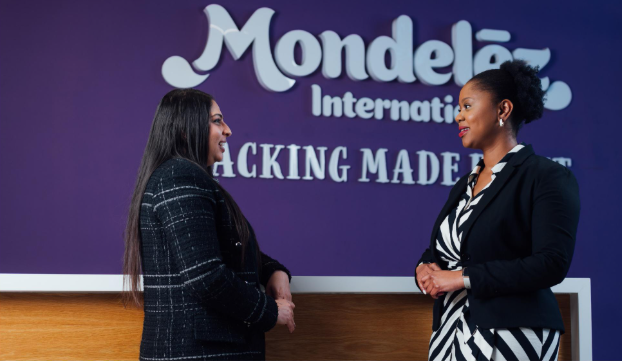
Mukondeleli, SSA BU Procurement Director for Sub-Saharan Africa at Mondelēz International, brings more than two decades of experience spanning science, brewing, logistics, strategic sourcing and procurement leadership. Her career has taken her from the laboratory at SABMiller to senior roles across food, FMCG, tissue manufacturing and, today, one of the world’s leading snacking businesses.
In this interview, she reflects on the experiences that shaped her leadership, the importance of mentoring young women, and the role procurement plays in responsible sourcing, supplier development, digital transformation and supply chain resilience across the region.
Click below to access the digital version:
Career Journey: Can you share your career journey and what led you to your role as SSA BU Procurement Director at Mondelēz International, and which experiences have most shaped your leadership style in procurement and supply chain?
My career began 23 years ago as a young, qualified biotechnologist, eager to experiment in the laboratory and field and ready to change the world through science. That journey started with SABMiller, now AB InBev, where I joined as a Microbiology Laboratory Technician. Through curiosity and the opportunities the organisation offered, I spent 11 years growing across several functions, including microbiology, technical brewing, logistics, raw material buying, procurement operations and strategic sourcing.
From there, I moved across industries. I joined Famous Brands as Procurement Manager across raw materials and packaging, then SC Johnson as Procurement Operations Manager for Sub-Saharan Africa. I later moved into the tissue industry with Twinsaver as General Manager of Procurement before taking on my current role as Procurement Director for Sub-Saharan Africa at Mondelēz International. Along the way, I completed qualifications in project management, CIPS and CIPP through IPSCMI. Today, I oversee end-to-end procurement across the SSA business unit, managing approximately R8 billion in spend.
Working across diverse and often challenging markets, particularly in West Africa, has shaped my leadership significantly. Navigating regulatory complexity, capability gaps and socio-economic realities has reinforced the importance of agility, strong governance and ethical decision-making.
My leadership approach is grounded in integrity, collaboration and continuous learning. I believe deeply in developing people, creating space for teams to contribute, and building trusted stakeholder and supplier relationships. I remain intentional in my decisions, especially where people are concerned, and I try to approach every situation as though it were my own business. Most importantly, I remain teachable and resilient, because in African markets you must always keep the end goal in sight.
Mentoring and Empowering Young Women: You are passionate about mentoring and aiding young women. What inspired this focus, and how do you practically create opportunities and support networks for young women within Mondelēz and beyond?
When I first stepped into a management role, I had a very memorable interview with the recruiting manager at the time, Pedja Teranjunin, who later became one of my biggest cheerleaders. He saw beyond a young woman with qualifications and experience. As he explained it, he saw that I had fire in me.
From my first day working with him, he showed enormous faith in my ability and allowed me to be myself. Through that experience, I became a strong advocate for women and for the importance of giving them a genuine opportunity to sit at the table and demonstrate what they can do.
I grew up in a rural area in the far north of Limpopo and attended a science and mathematics school that lacked many resources during the 1990s. I only began using a computer during my first year at university, but I refused to allow my circumstances to define me.
My passion for mentoring young women also comes from seeing the futures of girls in my school and community disrupted by teenage pregnancy. For many, there appeared to be no route forward because of their financial circumstances. That stayed with me and became a major reason why I support young women and create opportunities wherever I can. I often use the phrase, “Be the girl you think you are.”
Women today must navigate many different roles, including sister, mother, wife and senior professional. To succeed, we need strong support structures, mentors, sponsors and communities that allow women to grow without feeling that they must carry every challenge alone.
Procurement’s Role in “Snacking Made Right”: Procurement is critical to delivering safe, high-quality snacks that reflect Mondelēz International’s “Snacking Made Right” vision. How does your team contribute to ensuring responsible sourcing and consistent product quality across SSA?
Delivering safe, high-quality snacks that reflect Mondelēz International’s “Snacking Made Right” vision requires genuine teamwork.
Procurement sits at the centre of that collaboration, working closely with suppliers, Quality, Food Safety, Manufacturing, Supply Chain, Marketing and Finance. Every function must remain accountable, agile and aligned around the same objective.
Quality and food safety are non-negotiable. We partner with suppliers that have the right capability, meet Mondelēz supply standards and adhere to our policies. This requires rigorous supplier selection, clear expectations and ongoing collaboration to ensure standards remain consistent across markets.
Responsible sourcing is also central to the way we work. We actively choose suppliers that align with our sustainability expectations, support capability development within local supply bases and reinforce ethical practices and governance across spend categories.
The role of procurement is therefore much more than securing supply at the right cost. We help create the conditions for quality, safety and reliability across the entire value chain. By working cross-functionally and maintaining strong supplier relationships, we help ensure that products reach consumers with the consistency and integrity expected from Mondelēz International.
Ultimately, “Snacking Made Right” is delivered through shared accountability. Procurement helps connect every part of that process, from supplier selection and responsible sourcing through to manufacturing, quality assurance and the final consumer experience.
Sustainability and Responsible Sourcing: Sustainability is a strategic priority for Mondelēz, from ingredients to packaging. How do you integrate sustainability and responsible sourcing into your procurement decisions in the SSA region, and what progress are you most proud of?
Sustainability is central to how we make procurement decisions across Sub-Saharan Africa.
At Mondelēz International, responsible sourcing is embedded into our strategy, from the selection of raw materials through to the way we work with suppliers and farming communities. Globally, we prioritise the sustainable sourcing of key ingredients through signature programmes such as Cocoa Life and other responsible sourcing initiatives that support environmental stewardship and social impact throughout our supply chains.
Within the SSA region, this means actively selecting suppliers that align with our sustainability expectations, supporting capability development within local supply bases and reinforcing ethical practices and strong governance across spend categories.
By integrating sustainability criteria into procurement decision-making, we strengthen resilience, reduce environmental impact and build long-term partnerships that benefit both the business and the communities connected to our supply chain.
I am particularly proud of the progress made in advancing sustainable ingredient sourcing. These efforts support farmer livelihoods, encourage more regenerative practices and help ensure our snacks are not only high quality, but also made in the right way.
For me, responsible sourcing is not a separate activity or a compliance exercise. It is part of how we create long-term value. Procurement has a responsibility to consider the full impact of its decisions, including the effect on communities, suppliers, the environment and the future resilience of the business.
Supporting Local and Regional Suppliers: Operating across SSA brings a diverse supplier base and varied market realities. How do you approach developing and partnering with local and regional suppliers while maintaining Mondelēz’s global standards?
Operating across Sub-Saharan Africa requires us to balance local relevance with global standards.
My approach to supplier development begins with recognising the value that local and regional suppliers bring, including proximity, agility and local market knowledge. At the same time, Mondelēz’s global standards around quality, food safety, ethics and sustainability remain non-negotiable.
We focus on building long-term partnerships rather than transactional relationships. This includes supplier capability assessments, structured onboarding and targeted development initiatives that help suppliers meet our requirements over time. Collaboration, transparency and clear expectations are essential, particularly in markets where capability levels can vary. We need suppliers to understand not only what the standards are, but also why they matter and how meeting them supports long-term success for both organisations.
By investing in supplier development, strengthening governance and sharing best practices, we enable local suppliers to grow alongside the business. This contributes to a more resilient and competitive supply base while also supporting economic development across the region.
The goal is not to lower global standards to accommodate local conditions. It is to help local and regional suppliers build the capability required to meet those standards consistently. When that is achieved, the benefits extend beyond procurement. It creates stronger businesses, more resilient communities and a supply ecosystem capable of delivering long-term value across the region.
Digital Transformation in Procurement: Digital tools and data are reshaping how procurement teams operate. How is your team using technology and analytics to improve transparency, efficiency and decision-making in your supply base?
Digital transformation plays an important role in how procurement teams operate and create value.
Technology and data enable greater transparency, consistency and speed across sourcing, contracting and supplier management processes. This is particularly valuable in complex, multi-market environments such as Sub-Saharan Africa, where visibility and standardisation can be challenging.
Procurement teams are using digital tools to improve spend visibility, strengthen compliance and support more data-driven decision-making. Analytics help us identify risks, efficiency opportunities and performance gaps within the supply base, allowing teams to act proactively rather than reactively.
Digital platforms also support stronger supplier collaboration by standardising processes, improving information flow and strengthening governance. Better access to information allows for clearer performance discussions and more informed decisions across both internal and external relationships.
Importantly, technology is not a replacement for relationships. It is an enabler that allows procurement professionals to spend less time on repetitive activity and more time on strategic value creation, supplier development and business partnership. By embedding digital capability into procurement ways of working, teams are better positioned to manage complexity, respond to market volatility and support sustainable, resilient supply chains.
The value of technology ultimately lies in how effectively it improves judgement, speed and alignment. The objective is not simply to digitise existing processes, but to create a procurement function that is more transparent, informed and capable of anticipating what the business will need next.

Building High-Performing, Inclusive Teams: Mondelēz is recognised as a top employer with a strong focus on inclusion. How do you build a high-performing procurement team, and what specific practices help you create an environment where women can thrive and lead?
Building a high-performing procurement team begins with creating a culture of trust, accountability and continuous learning. Clear expectations, strong governance and a shared sense of purpose allow teams to perform consistently, even in challenging environments. People need to understand the direction, what is expected of them and how their contribution supports the organisation’s goals.
Inclusion is a key driver of performance. Diverse teams bring different perspectives, stronger problem-solving and better decision-making. Creating an environment where women can thrive requires intentional action, including equitable access to opportunities, stretch assignments, mentorship, sponsorship and visible role models in leadership.
Psychological safety is equally important. People need to feel able to speak openly, challenge ideas and contribute without fear. Flexible ways of working and honest dialogue help individuals bring their full selves to work and perform at their best. Developing talent, recognising contributions and investing in leadership capability also ensure that performance is sustainable beyond individual roles.
A strong leader should not only deliver results, but also create the conditions for others to grow and succeed.
When people feel valued, supported and appropriately challenged, high performance becomes a natural outcome rather than something that must be forced. For women in particular, having access to opportunities, trusted support networks and leaders who advocate for their development can make a defining difference in their progression.
Navigating Regional Challenges and Risks: Procurement in SSA can involve complex logistics, regulatory differences and geopolitical risks. What are some of the key challenges you encounter, and how do you and your team build resilience into the supply chain?
Procurement in Sub-Saharan Africa presents a distinct set of challenges, including infrastructure constraints, regulatory complexity, geopolitical risk and supply market volatility. Successfully navigating these realities requires a proactive, flexible and locally informed approach to risk management.
We build resilience through diversified sourcing strategies, robust scenario planning and deep engagement with the local supply base. Understanding market dynamics and regulatory environments at country level is essential, as is maintaining close cross-functional collaboration with internal stakeholders.
Strong governance frameworks, compliance standards and structured risk assessment processes provide consistency across the region. At the same time, local expertise gives teams the agility required to respond quickly when conditions change.
Continuous monitoring and data-driven insight help identify potential disruptions early and shape effective mitigation strategies. However, systems and processes alone are not enough.
As we often say, “Africa is not for sissies.” What truly makes the difference is the strength of the supplier relationships we build. Trust developed over time allows organisations to respond faster, communicate openly and work together through disruption.
By combining global best practice with local insight, procurement teams can manage uncertainty more effectively and maintain continuity of supply in even the most complex environments. At the heart of resilience is the ability to remain prepared, adaptable and connected to the partners who understand the market on the ground.
Future of Procurement in Food and Snacking: Looking ahead, what trends do you believe will most influence procurement in the food and snacking industry, particularly in emerging markets like SSA, and how are you preparing your organisation for these changes?
The future of procurement in the food and snacking industry will be shaped by sustainability expectations, digitalisation, supply chain resilience and changing consumer demands.
In emerging markets such as Sub-Saharan Africa, these trends are amplified by climate risk, infrastructure constraints and socio-economic considerations. Procurement teams will need to manage these pressures while maintaining quality, continuity and affordability.
Responsible sourcing, transparency and traceability will continue to grow in importance. Consumers, regulators and businesses increasingly expect clearer visibility into where products come from, how suppliers operate and what environmental and social impact exists across the value chain.
Supplier collaboration and innovation will also become more important. Many of the challenges facing food supply chains cannot be solved by procurement teams working alone. Strong partnerships will be essential to improving resilience, developing new solutions and responding to changing market needs.
Digital tools and analytics will further strengthen visibility, efficiency and risk management. Procurement organisations are preparing by investing in capability development, improving data and systems, and embedding sustainability more deeply into decision-making.
The ability to remain agile and adaptable will be critical. Future procurement leaders will need strong commercial judgement, digital capability and a clear understanding of local markets. Those organisations that combine these strengths with trusted supplier partnerships will be best positioned to navigate future complexity and create long-term value.
Advice for Young Women in Procurement and Supply Chain: For young women aspiring to build careers in procurement and supply chain, what practical advice would you offer on gaining credibility, finding mentors and navigating their growth into leadership roles?
For young women aspiring to build careers in procurement and supply chain, credibility begins with mastering the fundamentals, understanding the business, developing technical expertise and consistently delivering on commitments.
Confidence grows through preparation, curiosity and a willingness to take on challenges. You do not need to have every answer immediately, but you do need to remain willing to learn, ask questions and take responsibility for your development.
Seeking out mentors and sponsors is essential. Mentors provide guidance, perspective and a safe space to discuss challenges. Sponsors go a step further by actively advocating for opportunities, visibility and progression. Building strong professional networks and learning from different role models can accelerate growth significantly.
It is also important to speak up and trust your voice. Leadership is not about knowing everything. It is about listening, collaborating and making informed decisions with integrity.
Resilience matters because careers are built over time. There will be setbacks, difficult environments and moments when confidence is tested. Remaining grounded in your values while staying adaptable will support long-term growth.
At the heart of it all are ethics and credibility. Procurement and supply chain professionals interact with both suppliers and stakeholders throughout the business, which means we are often seen as representatives of the organisation. The way we act, communicate and make decisions shapes how others view both us and the business we represent.
Ecosystem Partners
Companies supporting and shaping this feature’s wider story.
Axxela

Axxela Limited is Nigeria’s pioneer private-sector developer of natural gas solutions, delivering integrated energy infrastructure across gas processing, transmission, distribution and captive power generation. With more than 400 kilometres of pipeline infrastructure and around 200 industrial and commercial customers, the company supports business continuity, productivity and long-term industrial growth across Nigeria and the wider West African region.
As highlighted in this feature, Axxela supports Mondelēz International through reliable energy infrastructure that helps strengthen manufacturing continuity, operational resilience and production performance. Its work with Cadbury Nigeria includes the development and operation of a dedicated 5.8MW captive power plant, combining secure natural gas supply with dependable power generation.
Visit Axxela: axxelagroup.com
Savannah

Savannah is a specialist ingredient supplier supporting food and beverage manufacturers across bakery, confectionery, dairy, desserts, culinary applications and nutrition. Its approach combines ingredient expertise, product development capability and supply support designed to help customers improve quality, consistency and innovation across complex manufacturing environments.
As highlighted in this feature, Savannah works closely with Mondelēz International through a Vendor Managed Inventory model that supports stock availability, forecasting accuracy and supply continuity. By combining shared data, regular engagement and proactive inventory management, the partnership helps strengthen resilience, improve planning and reduce potential disruption across the supply chain.
Visit Savannah: www.savannah.co.za
K&F Industries & Naxos Baking Technologies
K&F Industries and Naxos Baking Technologies provide specialist ingredients, processing technology and food manufacturing solutions to major international food businesses. Their combined capabilities span bakery and confectionery ingredients, processing systems, technical expertise and equipment designed to support consistent quality, operational efficiency and reliable high-volume production.
As highlighted in this feature, K&F Industries and Naxos have supported Mondelēz International through a long-standing relationship focused on quality, reliability and continuous improvement. Their work includes supporting Cadbury’s manufacturing operations with specialist ingredients and processing solutions, helping maintain product consistency, strengthen operational performance and support the demands of large-scale food production.
Visit K&F Industries: www.kandfindustries.co.za
Constantia Flexibles
Constantia Flexibles is a global flexible packaging specialist focused on developing packaging solutions that balance product protection, manufacturing performance and progress towards circularity. Its Ecolutions portfolio combines paper, mono-material films and aluminium, with structures selected around requirements including barrier performance, shelf life and compatibility with existing filling lines.
As part of the Mondelēz ecosystem, Constantia Flexibles brings packaging expertise focused on simplifying structures, improving material efficiency and supporting more recyclable packaging designs where collection and recycling infrastructure allows. Through close customer collaboration, its approach balances technical performance with the practical realities of different products, markets and regulatory environments.
Visit Constantia Flexibles: www.cflex.com