From Accidental Start to Strategic Impact: Ismail Halim (FCIPS) on Procurement, Public Value, and Building Trust in New Zealand’s Public Sector
Procurement in the public sector plays a critical yet often understated role in delivering essential services, balancing governance, value, and long-term societal impact. At the New Zealand Qualifications Authority (NZQA), procurement is a key enabler of trusted education outcomes, supporting systems that impact learners, educators, and institutions across Aotearoa.
Ismail Halim (FCIPS), Senior Procurement Advisor at NZQA, brings a diverse background spanning telecommunications, automotive, banking, and power generation, alongside deep professional grounding through the Chartered Institute of Procurement and Supply (CIPS). His journey into procurement was unplanned, but his progression reflects a clear commitment to continuous learning, ethical practice, and building meaningful supplier partnerships.
In this interview, Ismail shares insights on governance, sustainability, supplier collaboration, and the evolving role of procurement within the public sector, offering a grounded perspective on how procurement can deliver both operational excellence and public value.
Click below to access the digital version:
Career Journey: You’ve built your procurement career within public-sector and advisory environments. How did you know procurement was the path for you, and can you share your career journey and what led you to your role as Senior Procurement Advisor at the New Zealand Qualifications Authority?
I’ll be honest, I had no idea what procurement was when I started out as a call-centre representative. My career only began to take shape after completing a logistics certification in Malaysia, which opened the door to a supply chain role in a small engineering company. Later, while working for a shipping company, an organisational restructure placed me in the procurement team as a junior buyer. That unexpected move, combined with enrolling with the Chartered Institute of Procurement and Supply, set the foundation for my career.
Since then, I’ve worked across telecommunications, automotive, banking, and power generation, each role building my perspective and skill set. Moving to New Zealand in 2019 allowed me to transition into the public sector as a senior procurement specialist. I’ve now been with NZQA for almost 18 months, and I’m still learning every day, which is one of the things I value most about this profession.
Procurement’s Role in Delivering Education Services: NZQA plays a vital role in maintaining New Zealand’s qualifications framework and education standards. How does your procurement function support NZQA’s mission to deliver reliable, high-quality services to learners, educators, and institutions?
Our procurement team plays a quiet but critical role in enabling NZQA to deliver reliable, high-quality services. We focus on building strong, long-term supplier partnerships so we can co-design solutions and maintain consistent service standards.
Through strategic sourcing and coordinated planning, we leverage economies of scale to maximise value for money. This allows NZQA to reinvest savings into priority initiatives that directly support learners and the wider education system.
At the same time, we apply strong quality assurance and risk management practices to ensure every product and service is reliable, secure, and fit for purpose. Ultimately, procurement creates the commercial foundation that allows NZQA to operate with confidence and focus on delivering trusted outcomes for Aotearoa.
Governance and Compliance in Public Procurement: Public-sector procurement requires strong governance, transparency, and accountability. How do you balance compliance and policy requirements with achieving value, efficiency, and innovation in procurement activities at NZQA?
Compliance is non-negotiable, but it should not come at the expense of value or innovation. For me, the balance starts with building processes that people trust. That means being transparent with stakeholders about the rules, why they exist, and how we can work within them effectively.
I focus heavily on early engagement with internal teams so we can shape procurement approaches together and avoid delays or surprises later. With suppliers, I set clear guardrails while encouraging them to bring forward new ideas, sustainable solutions, and innovative approaches that still meet governance requirements.
Strong documentation and consistent evaluation ensure compliance, while a pragmatic mindset helps maintain efficiency. Ultimately, the goal is to deliver strong outcomes for NZQA while protecting public value and maintaining accountability.
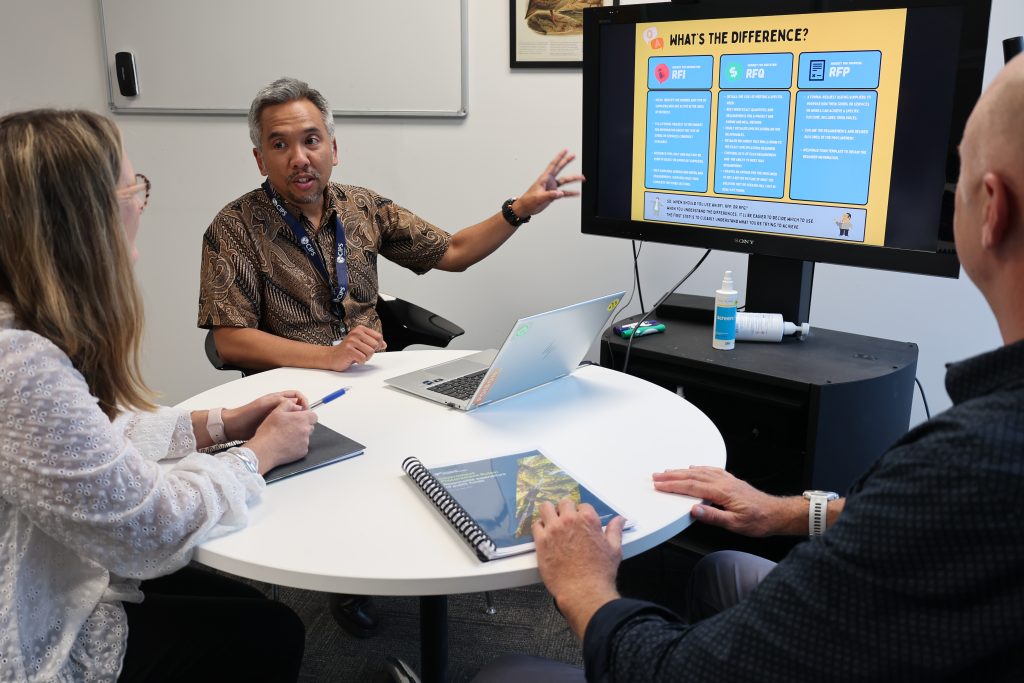
Supplier Relationships and Quality Assurance: What strategies do you use to build strong, transparent relationships with suppliers, and how do you ensure partners consistently meet NZQA’s service, technology, and performance standards?
Strong supplier relationships are built on clarity, fairness, and consistency. I set expectations early and ensure suppliers understand what good performance looks like from NZQA’s perspective.
My approach is influenced by CIPS principles, particularly around ethical practice, open communication, and structured performance management through KPIs rather than assumptions. I maintain regular engagement with suppliers, not just when issues arise, which helps build trust and transparency.
Quality assurance comes from a combination of formal processes, such as service reviews, performance reporting, and risk checks, alongside maintaining open and respectful relationships. When suppliers feel trusted and valued, they are more committed to delivering against expectations. It becomes a shared responsibility rather than just a contractual obligation.
Sustainability and Social Value: Sustainability and social responsibility are increasingly important in government procurement. How is NZQA integrating sustainability, ethical sourcing, and broader social value into procurement strategies?
Sustainability is no longer something we consider at the end of a process. It is built into procurement from the beginning. At NZQA, we are integrating sustainability, ethical sourcing, and social value into everyday decision-making.
This means asking better questions during planning. Can we reduce waste? Are there opportunities to engage local or social enterprises? What are the environmental impacts across the full lifecycle?
I also work closely with internal teams to translate sustainability into practical actions rather than high-level principles. With suppliers, we encourage greater transparency around labour standards, environmental impact, and responsible practices, while recognising that progress is a journey.
It is not about being perfect. It is about making consistent, intentional improvements and ensuring procurement reflects public-sector values.
Demand Planning and Service Continuity: How do you approach demand planning and supplier coordination to ensure continuity of supply and service, particularly for critical or time-sensitive requirements?
Demand planning in a public-sector environment requires close collaboration because requirements can shift quickly. My approach is to engage early with business teams to understand upcoming needs, priorities, and potential risks.
For critical or time-sensitive requirements, I work closely with suppliers to confirm capacity, lead times, and contingency options. Clear communication is essential, particularly when timelines are tight.
We also use historical data and forward planning where possible to anticipate demand rather than react to it. Maintaining strong supplier relationships gives us greater flexibility when unexpected requirements arise.
Ultimately, continuity comes from preparation, transparency, and having trusted partners who understand the importance of the services NZQA delivers.

Risk Management and Resilience: From technology dependencies to supplier risks, what are the key procurement risks NZQA navigates, and how do you manage these to ensure uninterrupted service delivery?
Risk is always present in procurement, whether it relates to technology dependencies, single-source suppliers, or tight delivery timelines. At NZQA, we focus on being proactive rather than reactive.
This starts with understanding critical services and identifying potential points of failure. I work closely with internal teams to map risks early, particularly where suppliers or systems are essential to operations.
With suppliers, we assess capacity, financial stability, security posture, and disaster recovery readiness. Regular performance discussions help identify early warning signs.
We strengthen resilience through supplier diversification where possible, clear service-level expectations, and contracts that support continuity and escalation. While not all risks can be eliminated, transparency, documentation, and strong communication ensure we are prepared.
The Evolution of Procurement in the Public Sector: In your experience, how is procurement maturity evolving across New Zealand’s public-sector agencies, and where do you see the greatest opportunity?
Procurement has evolved significantly across both public and private sectors. Agencies are moving beyond purely transactional or compliance-driven models and placing greater emphasis on commercial thinking, early engagement, sustainability, and long-term value.
One of the most important shifts is the recognition that procurement shapes outcomes, not just transactions. When involved early, procurement can influence design, manage risk proactively, and create pathways for innovation.
There is still opportunity to grow, particularly in capability development and data-driven decision-making. However, the overall direction is positive.
The greatest opportunity lies in strengthening partnerships across internal teams, suppliers, and other agencies. When procurement is trusted and well-integrated, it becomes a strategic lever for delivering better outcomes.
Advice for Aspiring Procurement Professionals: As a procurement advisor within a complex public-sector environment, what advice would you give to professionals looking to build impactful careers in procurement, commercial advisory, and public-sector transformation?
My biggest advice is to stay curious. Procurement is not just about policies and contracts. It is about understanding people, markets, risks, and how organisations operate.
Focus on the fundamentals. Document decisions, communicate clearly, remain transparent, and involve the right stakeholders early. These habits will carry you through any environment.
Networking is also critical. Connecting with procurement professionals across industries provides new perspectives, accelerates learning, and builds a support system.
Finally, stay open to unexpected opportunities. Many of us did not plan to enter procurement, but it offers diverse and rewarding career paths. Being adaptable and willing to learn will take you further than any predefined plan.
Future of Procurement as a Profession: Where do you see the procurement profession heading, and what skills will matter most in the next five years?
Procurement is becoming increasingly strategic and influential. Organisations now recognise it as a function that shapes risk, value, and long-term outcomes rather than simply managing processes.
Over the next five years, procurement will become more embedded in decision-making, particularly in areas such as sustainability, market intelligence, and commercial governance.
The most important skills will be commercial acumen, stakeholder influence, and the ability to interpret market dynamics quickly. Strong fundamentals such as ethical practice, category management, and structured analysis remain essential, but what differentiates professionals is the ability to apply these in complex environments.
Adaptability will also be critical. Markets, technologies, and expectations are constantly evolving. Those who remain curious, connected, and grounded in professional standards will lead the next phase of procurement transformation.
Featured Partner
Supporting and shaping this feature’s core transformation story.
Acumen Consulting
Acumen Consulting helps organisations get more value from their business systems, data, and processes. Its approach combines an intimate understanding of client operations with a team of New Zealand software integrators and consultants, supported by a carefully selected portfolio of specialist software applications.
As part of the NZQA ecosystem, Acumen Consulting supports the broader technology and systems environment that underpins smarter business decisions. Its focus on software integration, consulting expertise and business systems aligns closely with the feature’s themes of digital capability, operational resilience and procurement-led value creation.
Visit Acumen Consulting: www.acumenconsulting.co.nz