Building Strategic Partnerships for the Future: An Exclusive Interview with Martin Hayles, SVP of Global Alliances at JAGGAER
In today’s fast-evolving technology landscape, strategic alliances are more important than ever. As Senior Vice President of Global Alliances at JAGGAER, Martin Hayles is at the forefront of shaping the company’s partnership strategy to drive growth and innovation. With a wealth of experience in procurement, supply chain, and alliance management, Martin has navigated a diverse career path that has led him to lead JAGGAER’s Amplify Global Alliance Partner Program, a key initiative that has transformed the company’s global presence and approach to collaboration. In this cover story, Martin shares his unique journey, insights on building and managing global alliances, and the importance of strong, value-driven partnerships in shaping the future of procurement technology. Discover how
JAGGAER is leveraging its alliance strategy to foster growth, innovation, and sustainability across
industries.
Click below to access the digital version
Professional Journey: Can you share your career path leading up to your current role as
Senior Vice President of Global Alliances at JAGGAER?
I’ve had five different careers to date, each of which has given me a unique set of diverse skills and experiences. I truly believe I wouldn’t be where I am today without each of these roles. Like many procurement professionals, I didn’t set out, or have a specific desire, to work in this field—it just happened organically. Perhaps, you could say, procurement found me.
My procurement journey started in sales management. With a medical background, I became very adept at strategy selling to the New Zealand and Australian health sectors. The successes in the role led to an opportunity to move into the government side and eventually back to the UK, where I joined the Government Central Procurement Services Centre, the precursor to the Crown Commercial Service.
Through the procurement community in the UK and the connections I’d made over the years, I was presented the opportunity to design a new procurement operating model for BAE Systems. As part of that project, I on boarded and implemented a platform from a relatively new startup at the time called Coupa. While deploying that software and collaborating closely with their leadership, I was asked to join the startup to design and build a new strategy and partner program. Fast forward nine years, and the strategy and alliances programs I’ve helped build for Coupa and Ariba are culminating in an incredible and unique program here at JAGGAER.
Amplify Global Alliance Partner Program: JAGGAER launched the Amplify Global Alliance
Partner Program to enhance collaboration and growth. Could you elaborate on the program’s
objectives and the impact it has had since its inception?
When I joined JAGGAER in 2021, the company had a few partner relationships, but these were primarily centred around services outsourcing. The board recognised that in order to scale and drive new business on a global level, as well as to achieve service excellence, they needed better partner collaboration. JAGGAER has an exceptional services function, and partners bring additional, dynamic skill sets to the value we provide, such as landscape design, change management, project governance, and, of course, customer reach.
I joined JAGGAER specifically to design, build, and scale a partner program from scratch. It’s not often you get the opportunity to create your own program in a greenfield environment. You can imagine the potential, the excitement, and the pride of building something so foundational to a growing organisation. The program has been hugely successful and has impacted every part of JAGGAER—from product, marketing, and sales to top-line strategy. We’ve grown to over 100 partners globally, experienced triple-digit percentage growth in sourced and co-sell activity, and in
2025, we’re launching some exciting partner programs in specific product areas to maximise both JAGGAER’s and our partners’ growth.
Right Partner – Right Deal: JAGGAER emphasises a “Right Partner, Right Deal” approach. How does this strategy influence your alliance-building efforts, and what benefits does it bring to both JAGGAER and its partners?
We maintain a strong balance between partners sourcing opportunities for JAGGAER and JAGGAER bringing in partners for value added opportunities. We recognise the significant impact that partners can have early in the sales cycle, as well as their contribution to project success. While it’s easy to add implementation partners to a deal cycle, not every partner fits every customer. So we need to take into account factors such as partner capacity, capability, sector knowledge, and customer preferences when deciding which partner to include on a specific opportunity.
To formalise this, my team created an internal multidisciplinary board that reviews every deal based on its merits, size, complexity, and sector. Together, we determine if a partner would add value to the customer, and if so, which partner would be the best fit. This approach allows us to identify gaps in our partner community, pinpoint where these gaps exist, and develop strategies to fill them—either by recruiting new partners or by expanding the experience within our existing partner community. This has been extremely effective in aligning our internal partner strategy with our stakeholders at JAGGAER.
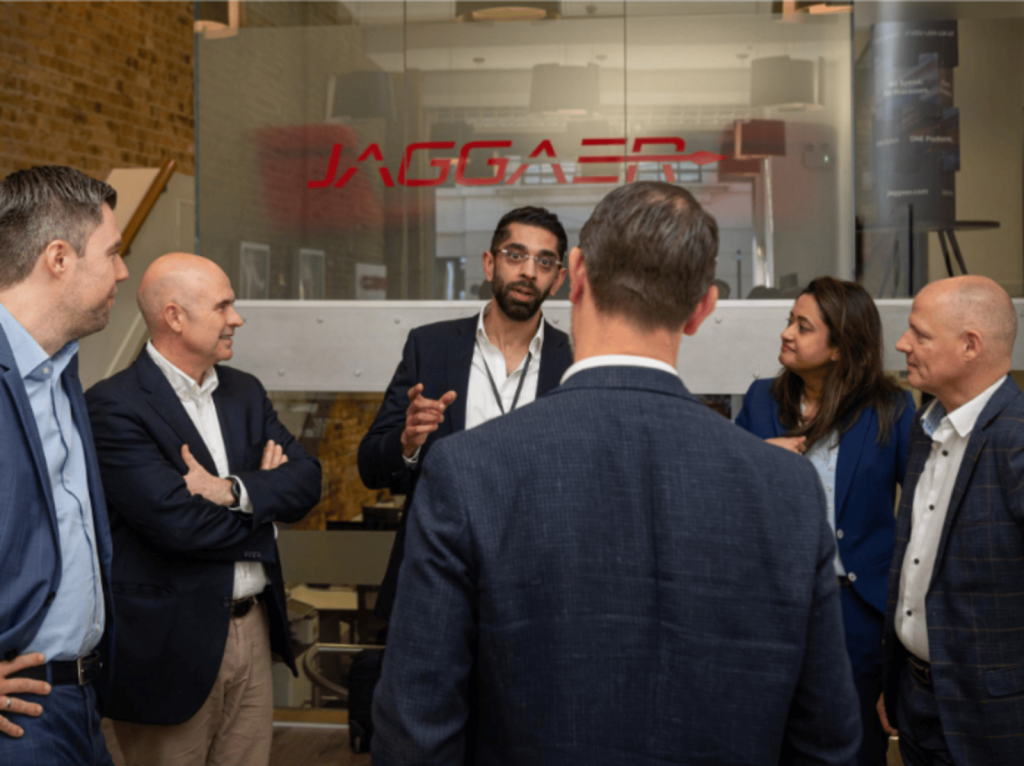
Regional Partnerships in the USA: JAGGAER has a strong presence in the USA. How does the company tailor its alliance strategy to foster strong relationships within the US market, and what opportunities do you see for growth and innovation through these partnerships?
JAGGAER has a 30-year history of providing procurement tools to the US market, a presence that continues to grow today with JAGGAER One, our intelligent source-to-pay and supplier collaboration platform. Initially, JAGGAER focused heavily on serving Higher Education, and the early partnerships we had reflected this. However, over the past three years, we’ve expanded our partnerships to broader sectors, particularly in Manufacturing and other verticals with complex supply chains.
We’ve seen similar expansion in other regions, including Europe and MEA, where procurement organisations are increasingly growing into strategic value drivers for their companies. Our partners have strongly supported our growth and diversification in these markets, and as we’ve grown together, this approach has driven innovation across product development, marketing, and extended partnerships with adjacent technology providers.
Adapting to Market Changes: In the face of evolving market dynamics, how does JAGGAER ensure its alliance strategies remain agile and responsive to industry shifts?
In this sector, there’s a high degree of movement and collaboration between partner leaders, alliances leaders, and sector experts. We form a tight-knit ecosystem, where professionals frequently collaborate between organisations. This constant strategising between partners and vendors keeps us well-attuned to industry changes and market shifts.
Working alongside our partners, rather than relying solely on direct sales, provides a faster and more effective feedback loop. We leverage these relationships to continuously monitor evolving agendas, buying trends, emerging technologies, and, in recent times, changes in compliance and regulations.
To ensure we stay ahead, we meet with all our top partners on a quarterly basis to review market dynamics and assess how we can respond to shifts. More importantly, we focus on emerging news and trends. Given that most sales cycles in this segment last at least six to nine months, it’s essential to identify and measure new opportunities well in advance to remain competitive and agile.
Technology Integration in Partnerships: How does JAGGAER collaborate with partners to integrate emerging technologies into your solutions, and what role do alliances play in driving innovation?
We are delivering a single platform augmented with best-of-breed 3rd-party technologies to meet the expanding needs of the procurement community. Over the past few years, I’ve observed a significant shift at conferences, with large single-solution booths being replaced by a host of smaller, API-connected solutions. From a customer standpoint, this evolution is a positive one, as it offers greater flexibility and choice.
However, this shift also makes it increasingly difficult to identify emerging solutions, choose the right partners, or even decide whether we should build something ourselves. The pace of innovation is so rapid and constantly changing that we need to review emerging technologies in groups, rather than individually, and assess their potential for integration. It’s essential that they connect seamlessly and deliver meaningful data or processes that solve customer problems while adding value to the JAGGAER One ecosystem.

Challenges in Alliance Management: What are some common challenges you’ve encountered in managing global alliances, and how have you addressed them to maintain strong partner relationships?
The two biggest challenges in alliance management are relationships and value. Strong partner relationships are crucial—after all, you collaborate with people you like, respect, and who show reciprocity. A partnership is much like a marriage: there are good times, bad times, and some difficult conversations. However, the key is to partner for the long-term. A significant driver for successful partnerships is the value we both derive from the relationship, particularly when it comes to customer satisfaction, market perception, acquisition costs, and long-term investment in the partnership. When reciprocity and respect are present, and when we have aligned joint goals, the outcomes are usually positive.
One of the biggest challenges with a global alliance structure is maintaining consistent, meaningful contact with key people across different regions. Each partner has its own structure, silos, and practices, which can vary from country to country, even within the same partner. To address this, it’s crucial to separate the structure and adopt a regional approach while maintaining global relations where possible.
Although vendors may have a unified structure, many global partners are, in fact, regional organiations that happen to share a joint logo. This requires additional consideration to be managed effectively. While vendors tend to operate globally, most of our partner relationships are regional. This requires a tailored market approach, where agreed upon goals and executive alignment are handled regionally on the partner side, but stay global on the vendor side. Balancing this is essential for ensuring that reciprocity and governance work effectively.
Advice for Aspiring Alliance Leaders: What advice would you offer to professionals aspiring to lead global alliances in the technology sector?
That’s a tough one, as I’m not sure many people intentionally choose this sector or aspire to work in it. Nearly everyone I’ve met has stumbled into it from other areas. If I were to pinpoint some specifics, I’d recommend gaining a varied set of experiences from roles in Sales, Marketing, Services, Procurement, or similar fields. Global Alliances is all about understanding relationships, strategy, value, and problem-solving. Learning these skills from different perspectives is essential when managing technology sector partnerships.
It’s less about the technical aspects of a technology. In fact, if you are particularly technical, I’d advise you to consider a different career path. What’s crucial is your ability to sell the vendor’s vision, articulate the value, and understand partner success. What value do you provide them? At the core, it’s all about relationships and value. I was recently discussing partners with our Global Head of Customer Success, and as we talked through our respective roles, I realised we are almost mirror images of each other. The way you manage, strategise, and deliver customer success mirrors how you manage partner success. While the values and drivers may differ, a Customer Success Manager (CSM) role closely matches an Alliance Director role. The main difference lies in the strategic side, which highlights the skills and attitude required for modern alliance roles.
Key Priorities and Investments for JAGGAER 2025: What are the key priorities and Investment for JAGGAER for in 2025?
JAGGAER is entering its 30th year of source-to-pay innovation and 2025 represents an opportunity for us to celebrate the achievements of our customers and partners. After all we are only as successful as these customers and partners, and our priorities for the year reflect a desire to showcase the incredible ways in which JAGGAER technologies help them accelerate business outcomes. For example, we’re excited to share the stories about the group of customers who have collectively saved hundreds of millions of dollars using JAGGAER’s Advance Sourcing Optimizer (ASO) to simplify highly complex sourcing events. REV2025, our annual customer experience that brings together source-to-pay experts, peers, partners and analysts—being held in Miami June 23-25—will showcase unique use cases like those of our ASO customers.
With regard to investment, I’ll highlight a particular focus in product. JAGGAER has been strategic about its implementation and embedding of AI-powered technologies with the purpose and intent of enhancing human decision making. In fact, the first AI-powered tools within the JAGGAER One platform date back to over ten years ago. Our investment priorities for 2025 will continue this tradition of innovation and help organisations to manage and automate complex processes while enabling their highly resilient, accountable, and integrated supplier base. We expect an exciting year ahead.
In Association with:

BearingPoint is an independent management and technology consulting firm with European roots and a global reach. Headquartered in Amsterdam, the firm operates in 24 countries with approximately 6,200 employees. Originally part of KPMG’s consulting division, BearingPoint became an independent partnership through a management buyout in 2009. The company provides business consulting, technology solutions, and managed services, helping organisations drive innovation, efficiency, and growth. With a strong focus on digital transformation and sustainability, BearingPoint collaborates with clients across industries to create measurable and lasting impact. In 2023, the firm reported revenues of €1.017 billion, reinforcing its commitment to delivering value-driven solutions worldwide.

RiseNow, founded in 2010 and headquartered in Leawood, Kansas, is a professional services firm specialising in procurement and supply chain transformation. The company offers comprehensive services, including the design, build, and operation of next-generation procurement and supply chain functions, tailored to meet the unique needs of its clients. Serving a diverse range of industries such as healthcare, life sciences, manufacturing, consumer goods, education, financial services, and the public sector, RiseNow emphasises aligning operating models and talent to drive efficiency, innovation, and sustainable growth. The firm’s unique RiseTalent apprenticeship program addresses the talent gap in digital procurement and supply chain management by developing skilled professionals equipped to manage and optimise complex systems. With a commitment to delivering customised solutions, RiseNow partners with organisations to transform their procurement and supply chain operations into strategic assets that enhance competitiveness and resilience.

Carbmee, founded in 2021 and headquartered in Berlin, Germany, is a technology company specializing in carbon management solutions for industries with complex supply chains, such as automotive, logistics, and manufacturing. Their Environmental Intelligence System (EIS) enables businesses to measure, report, and reduce carbon emissions across Scope 1, 2, and 3, providing comprehensive insights into corporate, product, and supply chain emissions. By integrating advanced technologies, Carbmee empowers organizations to achieve carbon transparency, identify reduction opportunities, and ensure compliance with environmental regulations. In December 2024, the company secured a $21 million Series A funding round led by CommerzVentures and Fly Ventures, underscoring its commitment to driving sustainable transformation in industrial value chains.